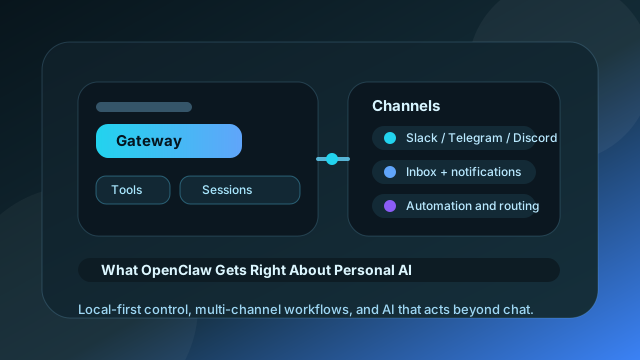
OpenClaw matters because it treats AI as a real personal assistant: local-first, multi-channel, and built to connect reasoning with action instead of stopping at chat.
Most AI products still live inside a browser tab, a playground, or a polished demo. They can answer questions, summarize documents, and generate code, but many of them still feel detached from the way real people work. OpenClaw is interesting because it pushes in a different direction.
OpenClaw presents itself as an open-source personal AI assistant that can run closer to the user instead of acting like a remote, one-size-fits-all chatbot. That design choice matters. A personal assistant should not feel trapped inside a single interface. It should be able to live where the user already communicates, thinks, and manages tasks.
One of the strongest ideas behind OpenClaw is its multi-channel mindset. The project is built around the reality that modern digital work is fragmented. People switch between chat apps, dashboards, tools, and devices all day long. Instead of pretending that everything will happen in one perfect chat window, OpenClaw is designed to connect with multiple channels and route work through a shared assistant layer.
This is where the project starts to feel more ambitious than a normal AI wrapper. It is not just about putting a language model behind a text box. OpenClaw is trying to turn AI into an operational system. The Gateway, the session-based structure, and the extensible skills approach all point to the same goal: move from passive conversation to useful action.
That is what makes the repository worth paying attention to from an engineering perspective. The future of personal AI will not be decided only by model quality. It will be decided by orchestration, tool use, memory, permissions, and how safely an assistant can interact with the software ecosystem around a user. OpenClaw seems to understand that. It is building the surrounding system, not just the prompt.
Another thing I like about the project is that it does not hide the trust problem. Any assistant that can act on your behalf becomes more powerful, but also more sensitive. Running closer to the user, working across channels, and supporting automation means security boundaries matter. OpenClaw treats that seriously, and that makes the project feel more grounded than many AI demos that only optimize for quick excitement.
From a product perspective, OpenClaw also represents a shift in how we should think about AI tools. The most useful assistants will probably not be the ones with the flashiest landing pages. They will be the ones that fit naturally into existing workflows, reduce friction, and help people get real work done. OpenClaw is compelling because it is built around that exact idea.
It is still an evolving open-source project, but that is part of why it is exciting. Repositories like this show where personal AI is heading: away from isolated chat experiences and toward assistants that coordinate tools, channels, and context in a more practical way. If you want to understand where agentic software might actually become useful, OpenClaw is a project worth studying closely.